Dig the Well Before You Are Thirsty
What a phone that didn't ring in 2020 revealed about preparation, behavior, and what financial advice actually is.
I used to tell my clients something so often it became almost automatic.
Markets will do something that frightens you. Not might. Will. The question is never whether it happens. The question is whether you are ready when it does.
Most of them nodded. Some of them wrote it down. A few of them, I think, assumed I was being professionally cautious — the kind of thing advisors say to manage expectations.
Then 2020 arrived. And I found out who had actually heard me.
The morning the world locked down, most advisors I knew were already buried. Inbound calls from the moment they sat down. Clients asking whether to sell. Clients who had already sold. The fear was running faster than anyone could manage it.
My phone was quiet.
I was making outbound calls. Checking in. Asking how people were holding up — not financially, just as human beings. And what I kept hearing, from client after client, stopped me.
You already told me this would happen.
I had. Not COVID specifically. Nobody saw that coming. But I had told them, in ordinary conversations during ordinary markets, that something like this was always coming. That disruption was not an interruption to the story of investing. It was part of the story. And I had told them what we would do when it arrived.
They remembered. And because they remembered, they didn't need to act.
That is the whole thing, right there. Everything else I learned in twenty-five years of financial markets is commentary on that single observation.
There was one client I think about more than the others.
She was someone who had built her life on the confidence that if you prepared enough and thought hard enough, outcomes were manageable. It worked well for her in almost every area. In investing, it created a quiet and recurring problem.
The feeling of not being in control was unbearable. So she had, over the years before we worked together, made decisions that reduced the feeling of risk rather than risk itself. Moved into investments that felt safe. Stepped away from markets when they made her uncomfortable. The portfolio felt manageable. But the long-term outcome was being slowly compromised with every decision made from anxiety rather than analysis.
She knew this, on some level. Knowing it didn't help.
What she needed wasn't a better portfolio. She needed a different relationship with uncertainty. And that is not something you can hand someone in a spreadsheet.
It took time. Months of conversations, then years. Slowly separating two things she had fused together without realizing it — the feeling of control and the reality of security. They are not the same thing. A portfolio that makes you feel in control is not necessarily one that protects you. And one built for genuine long-term security will, at various points, feel deeply uncomfortable.
She understood this in her head long before she understood it in her gut. That gap — between knowing something and being able to act on it when every instinct is pulling you the other way — is where most financial plans quietly fail. Not in the construction. In the moment of pressure.
By the time COVID arrived, the gap had closed. Not because markets had been kind to her. Because we had spent years preparing for the moment when they wouldn't be.
When I called her in the spring of 2020, she was nervous. But she wasn't panicking. She wasn't going anywhere.
Later, when markets had not just recovered but reached levels none of us had anticipated, she said something I have carried with me since.
I would have made a big mistake without your hand holding.
Hand holding. It sounds soft. Emotional. Not particularly financial.
But I have come to believe it is one of the most precise descriptions of what good financial advice actually does.
Not hand holding as reassurance. False reassurance — don't worry, it will be fine — is worse than useless in a crisis. It asks someone to trust a prediction nobody can make.
Hand holding as presence. As having already walked through the difficult terrain together, so that when it arrives in real life, the person isn't encountering it for the first time while also trying to survive it.
The well was dug before she was thirsty.
There is a framework I used for years when talking to clients about whether they needed an advisor at all. I believed in honesty about this. Not every person does.
Three things. Time. Will. Skill.
If you genuinely have all three — the time to research and monitor, the skill to construct a sound portfolio, and the will to stay disciplined when markets fall and your instincts are screaming at you to move — you can do as good a job as most advisors. Possibly better.
The challenge is that most people run short on at least one of the three. Usually at the worst possible moment.
Time disappears. Life intervenes. Skill can be built but takes years. And Will — the most underrated variable of the three, the one nobody talks about honestly — collapses with remarkable consistency exactly when it matters most.
I include myself in this. I have generally been good at reading value. I have not always had the time or the freedom to act on it. Which is why I moved, at a certain point, to funds and managers for my own investments. Not a concession. An honest assessment.
The research on this is striking. Studies consistently show that investors in the same fund significantly underperform the fund itself over time. Same vehicle. Different outcomes. The gap isn't the market and it isn't the manager. It's the timing of decisions made by people who couldn't sit still when sitting still was the only right answer.
The enemy of returns is rarely the market.
It is the investor's relationship with uncertainty — and what they do with it at the worst possible moment.
During COVID, while I was making those calls, my mother was alone and ill in another country. I had arranged support to be by her side. I understood, perhaps more clearly than at any other point in my career, what it meant to need someone who had already thought through the hard part — so you didn't have to do it alone in the middle of the night.
I saw my clients the same way.
Not as accounts. As people who had trusted me with something they couldn't entirely manage themselves. And my job — the real job, underneath all the allocation decisions and tax conversations and quarterly reviews — was to have already done the thinking before the crisis arrived.
So that when it did, all they had to do was remember.
The advisors whose clients panicked in 2020 were not bad advisors. Most of them were skilled, experienced, and genuinely trying to help.
They just hadn't dug the well.
Most of the financial services industry optimizes for the visible work. The models, the allocations, the reports. The invisible work — the behavioral architecture built in the quiet years — rarely gets talked about because it doesn't show up on a dashboard.
But it showed up in 2020.
In a phone that didn't ring.
In a client who remembered what she had been told years before and stayed exactly where she was.
In a portfolio that didn't just survive a once-in-a-generation crisis — but went on to reach levels nobody had predicted.
And in one line, said simply, that I have not forgotten.
I would have made a big mistake without your hand holding.
Dig the well before you are thirsty.
I have given a lot of advice over twenty-five years. I have sat with clients through divorces, through job losses, through market crashes, through the particular fear of not knowing whether what you have saved is enough to last.
This is the one I keep coming back to.
Not because it is clever. Because it is true. And because the people who understood it — who let it settle into how they thought about their money, their future, their relationship with a world they cannot control — were the ones who were still standing when the drought came.
The well doesn't dig itself. And the time to dig it is not when you are thirsty.
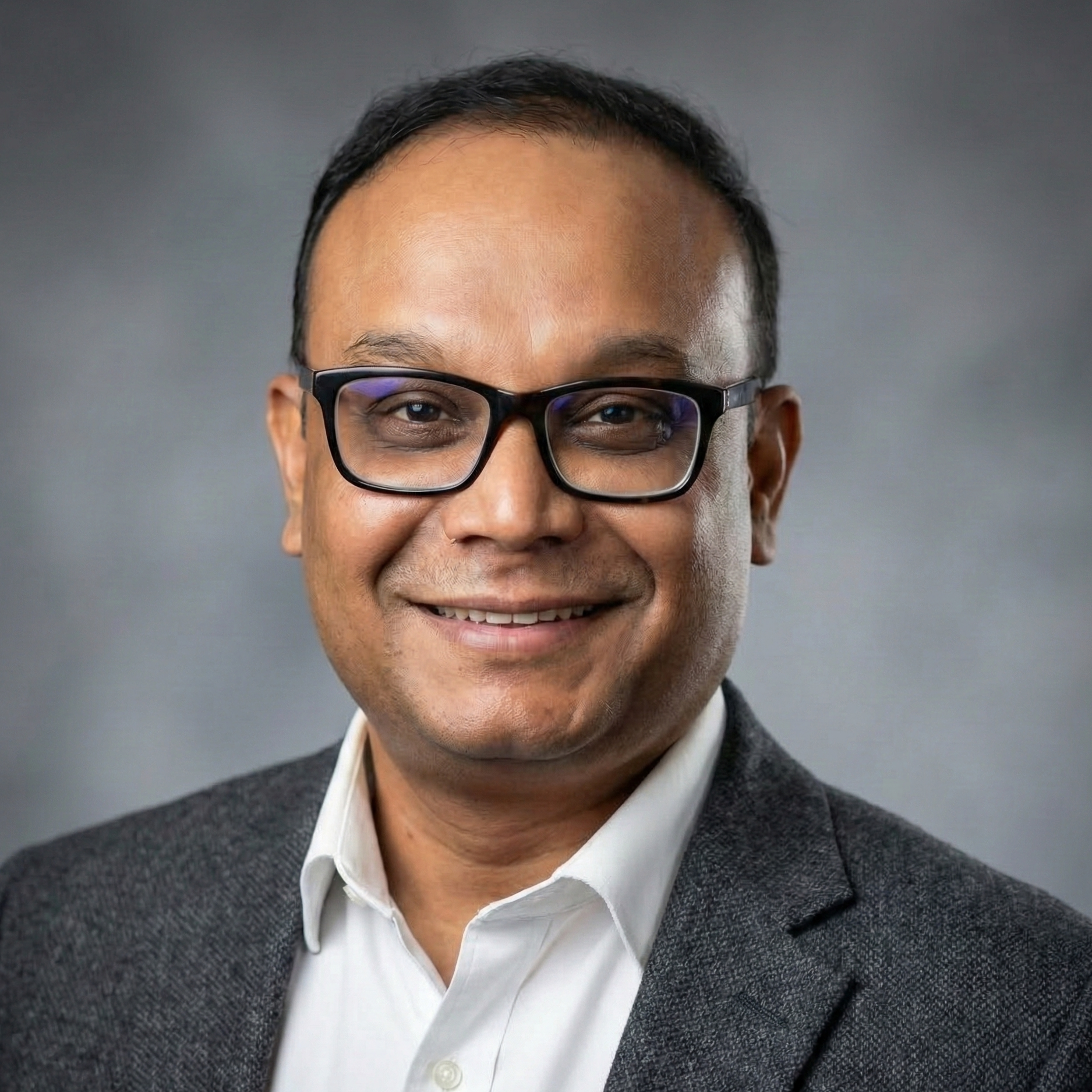
Diptes Basu is a capital markets practitioner and behavioral finance writer based in Delhi. He writes about investing, behavior, and what twenty-five years in global markets taught him about how people actually make decisions.
This article is for informational and educational purposes only. It does not constitute financial, investment, or professional advice. The experiences and observations described reflect the author's personal perspective and are not intended as recommendations for any specific investment strategy or course of action. Past outcomes are not indicative of future results. Readers should consult a qualified and registered financial advisor before making any investment decisions.